Training
Regional malaria microscopy course supports challenge and vaccine studies
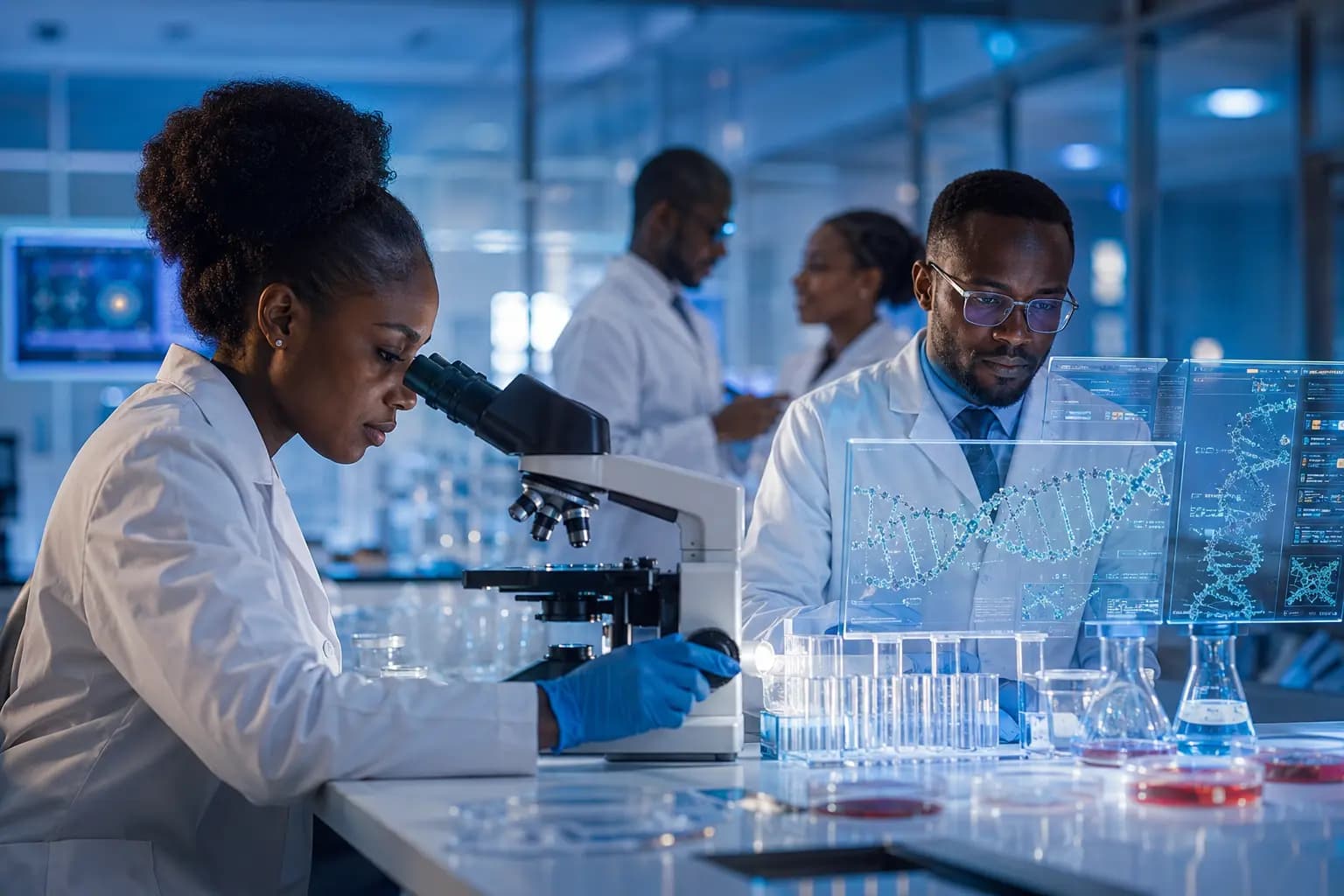
Laboratory professionals supporting malaria research — Tanzania
Supported by EDCTP, the 2013 Tanzania course strengthened a specialised laboratory skill essential to reliable malaria challenge and vaccine studies across the region.
In 2013, CREATES organised an Advanced Quantitative Thick Smear Malaria Microscopy for Challenge and Vaccine Studies Course in Tanzania with support from the European and Developing Countries Clinical Trials Partnership (EDCTP). Designed for laboratory technologists, the course addressed a specialised but fundamental requirement of malaria research: producing parasite measurements that clinical and scientific teams can trust.
A measurement that shapes critical decisions
Microscopy has long been central to malaria diagnosis and research. In challenge and vaccine studies, however, the task goes beyond identifying whether malaria parasites are present. Laboratory teams may need to detect infection at low parasite densities, quantify parasites consistently, document results precisely, and communicate findings within carefully controlled study timelines.
These measurements can influence important clinical and research decisions. A result may contribute to determining when an infection has become detectable, how parasite density changes over time, when treatment should begin under a study protocol, or how outcomes compare across participants and sites. Variability in slide preparation, staining, reading technique, calculation, or reporting can therefore affect both participant management and the integrity of the study evidence.
Advanced quantitative microscopy training helps laboratory technologists approach this work with a common method and a strong quality mindset. The objective is not simply to improve an individual's ability to read a slide. It is to build dependable laboratory systems in which preparation, examination, quantification, verification, recording, and review support one another.
Building regional consistency
The Tanzania course was the first in a documented sequence of regional microscopy activities organised by CREATES. Related advanced quantitative thick-smear courses followed in Gabon in 2014 and Ghana in 2015, also with EDCTP support. This progression shows a deliberate effort to strengthen specialised laboratory capability across more than one country.
Regional consistency is especially important in multi-site research. When teams use comparable approaches and understand common quality expectations, results can be interpreted with greater confidence across institutions. Training also creates professional networks through which technologists can exchange experience, discuss difficult cases, and support future studies.
Supporting challenge and vaccine research
The course's focus on challenge and vaccine studies aligned with a significant area of CREATES' scientific development. The Centre has contributed to controlled human malaria infection work and to the wider African platform needed to conduct challenge studies responsibly. Such studies require close coordination among clinical teams, laboratories, data specialists, ethics bodies, and participant-facing staff. Reliable parasite detection is one of the operational capabilities that makes this research possible.
CREATES later participated in clinical research and publications that advanced methods used in controlled human malaria infection, including work examining how molecular measurements can complement and improve the prediction of parasite dynamics. Microscopy remains part of that broader evidence system: a proven laboratory method strengthened by standardisation, quality assurance, and appropriate use alongside newer technologies.
Capacity that remains after a study ends
Specialised courses are sometimes described as support activities around the main research. For CREATES, they are part of the research infrastructure itself. Equipment and protocols are valuable only when trained people can use them consistently, recognise problems, and teach others. Laboratory technologists carry that capability from one project to the next and help embed quality within their institutions.
The 2013 course therefore represents more than a historical training event. It illustrates how CREATES approached capacity building from its early years: identify a capability required for high-quality African research, bring partners and practitioners together, connect learning to real studies, and extend the benefit across a regional network.
By strengthening quantitative malaria microscopy, CREATES and EDCTP invested in the accuracy of future challenge and vaccine studies, the professional development of laboratory technologists, and the region's ability to generate evidence for one of Africa's most important public-health challenges.
More from News & Events

4 YEARS AGO
BRAINS mobility programme launched at Strathmore University
By CREATES
Read more
7 YEARS AGO
Study coordinators strengthen clinical-trial operations skills
By CREATES
Read more8 YEARS AGO
Workshop advances the use of research data for infectious-disease treatment
By CREATES
Read more
10 YEARS AGO
Clinical Trials Management Workshop builds operational capacity
By CREATES
Read more
12 YEARS AGO
CREATES convenes Nanomedicines in Malaria Workshop
By CREATES
Read more