Event
CREATES convenes Nanomedicines in Malaria Workshop
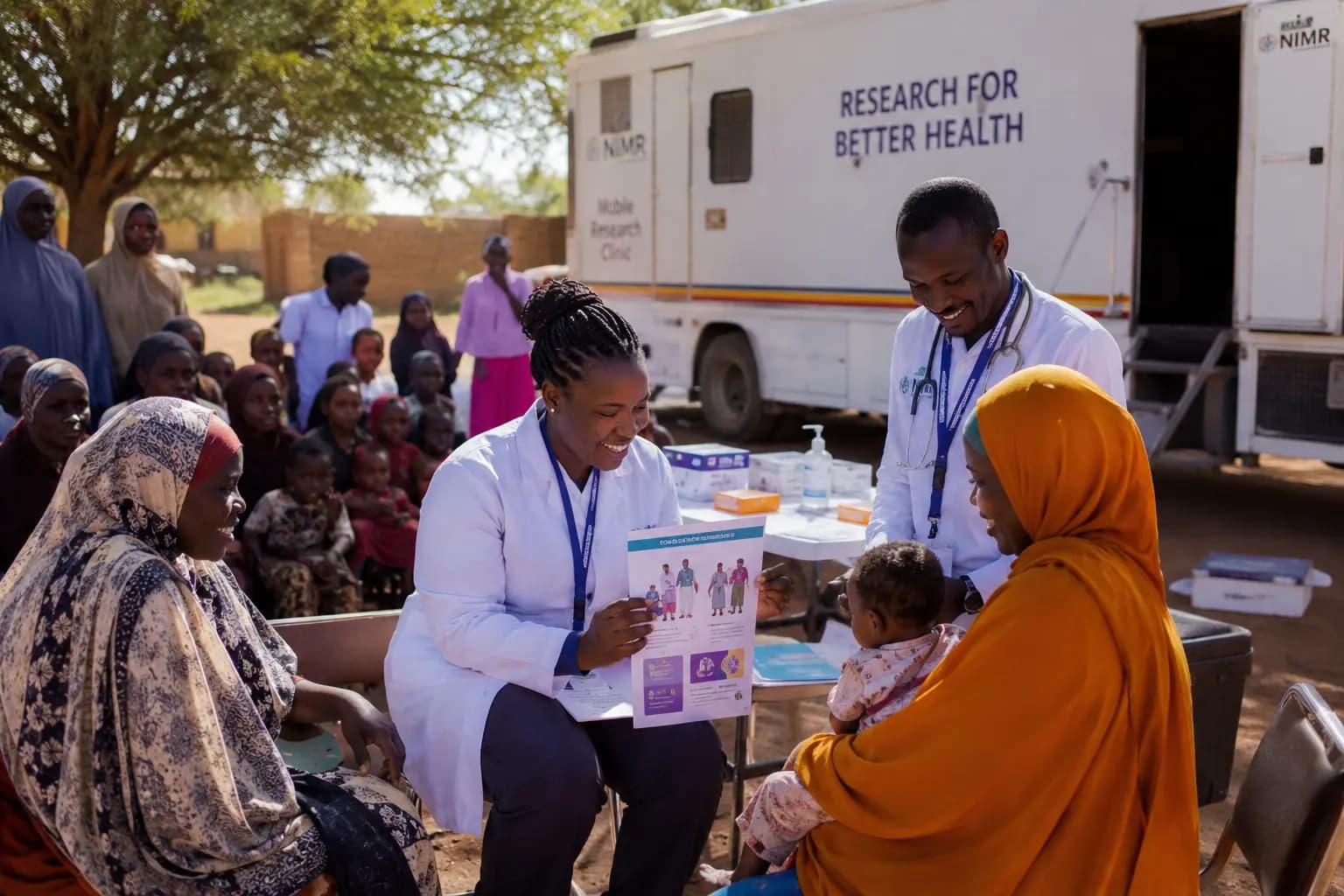
Scientists participating in a CREATES research workshop — Nairobi, Kenya
The National Research Fund-supported workshop connected malaria priorities with formulation science, regional collaboration, and the long path from a promising compound to a useful therapy.
In 2014, CREATES convened a Nanomedicines in Malaria Workshop with support from Kenya's National Research Fund. The workshop brought scientists together around a question that sits squarely within therapeutic sciences: how formulation and drug-delivery research might help existing or emerging antimalarial compounds become safer, more effective, more stable, or more practical to use.
Why formulation science matters
Discovering that a compound can act against a disease-causing organism is only one step in developing a treatment. A potential medicine must reach the right part of the body at an appropriate concentration, remain stable long enough to be stored and administered, and produce an acceptable balance between benefit and risk. Solubility, absorption, release, distribution, and manufacturing considerations can all determine whether promising laboratory science can progress towards a usable product.
Nanomedicine explores materials and delivery systems at a very small scale to influence some of these properties. In malaria research, this creates opportunities to investigate how antimalarial agents might be formulated and evaluated in new ways. It also creates demanding scientific questions. Novel formulations require careful characterisation, reproducible preparation, appropriate laboratory and preclinical testing, and a realistic view of how a product could eventually be manufactured and used in the settings where malaria remains a major burden.
Connecting disciplines around malaria
No single discipline can answer all of those questions. Chemists and formulation scientists examine the physical and chemical behaviour of a candidate. Pharmacologists consider how it moves through and affects the body. Parasitologists bring detailed knowledge of the malaria parasite. Laboratory scientists establish reliable methods, while clinical researchers and public-health specialists keep the work connected to patient and health-system needs.
The 2014 workshop created a space for those perspectives to meet. Its importance lay not only in discussing a particular technology, but also in encouraging scientists to think across the full development pathway. A formulation is valuable when it helps solve a meaningful therapeutic problem and can withstand the scientific, regulatory, operational, and access questions that appear between concept and patient care.
A collaboration and training pathway
The workshop also formed part of an emerging CREATES programme in nano-formulation research. The Centre's capacity-building record notes a 2013 laboratory exchange in nano-formulation of antimalarials with South Africa's Council for Scientific and Industrial Research, involving one doctoral researcher and one postdoctoral researcher. This connection between exchange-based training and a broader scientific workshop reflects the consortium model on which CREATES was established.
CSIR was one of the founding partners in the CREATES platform. Working across institutions enabled researchers to combine specialised expertise, facilities, and mentorship that would be difficult to assemble within one university. It also gave postgraduate and early-career scientists experience in collaborative research - an essential capability in modern product development.
From a scientific idea to patient value
CREATES was created to help move health innovation from concept towards the patient. Nanomedicine illustrates why that journey requires an open platform. Early formulation work must connect with analytical methods, safety evaluation, pharmacology, clinical development, ethics, data, and eventually questions of manufacturing and access. Progress depends on teams that can see both the promise of a technology and the evidence still required.
For malaria, the need for that discipline is particularly clear. The disease continues to affect communities across Africa, and new scientific approaches must be assessed against the realities of resistance, treatment delivery, cost, health-system capacity, and the people who will ultimately use a product.
The Nanomedicines in Malaria Workshop represents an early chapter in CREATES' effort to build this translational culture. By bringing scientists together, linking training with regional collaboration, and placing formulation research within a public-health problem, the Centre helped researchers look beyond discovery alone. The aim was to develop science capable of travelling further: through careful evaluation, across institutional boundaries, and towards therapies that can create genuine patient value.
More from News & Events
4 YEARS AGO
BRAINS mobility programme launched at Strathmore University
By CREATES
Read more
7 YEARS AGO
Study coordinators strengthen clinical-trial operations skills
By CREATES
Read more
8 YEARS AGO
Workshop advances the use of research data for infectious-disease treatment
By CREATES
Read more
10 YEARS AGO
Clinical Trials Management Workshop builds operational capacity
By CREATES
Read more13 YEARS AGO
Regional malaria microscopy course supports challenge and vaccine studies
By CREATES
Read more